

Sheepskin vs Synthetic Pram Liners: Which Is Actually Better for Your Baby?
You've spotted sheepskin pram liners. You've seen the price tag. And now you're asking - is it really worth it, or is a synthetic liner just as good?
It's one of the questions we're asked most often at Baa Baby, and rightly so. Pram liners can range from under £20 to well over £100, and when you're already spending a small fortune on a pushchair, the idea of paying extra for a liner - any liner - needs a convincing reason.
So let's go through it properly, a clear comparison of what sheepskin and synthetic liners each do, where they differ, and what that means for your baby day to day.
What's the actual difference in materials?
Synthetic pram liners are typically made from polyester fleece, microfibre, or faux sheepskin - man-made fibres derived from petroleum products. They're soft to the touch, easy to machine wash, and often come in a wide range of colours. At first feel, some of them are genuinely lovely.
Natural sheepskin - particularly merino lambskin - is a completely different material at a structural level. The fibres are hollow, crimped, and densely packed in a way that no synthetic can replicate. This isn't marketing language; it's the reason sheepskin behaves so differently in practice.

The temperature question - and why it matters more than you think
Babies under 18 months cannot regulate their own body temperature. That's not a small detail - it means your baby is entirely reliant on their environment to stay comfortable, whether it's July or January.
This is where sheepskin's thermostatic properties become genuinely important. The hollow fibres trap air and create a microclimate that adapts to your baby's temperature - warming in the cold and, crucially, drawing moisture away in the heat to keep them cool and dry.
Synthetic liners insulate - they keep warmth in, which is fine in winter. But in summer, or on a warm day in an enclosed buggy, that insulation works against you. Parents are often surprised to find their baby is hotter and sweatier on a synthetic liner than they would have been without one.
"I was a bit worried she would be too hot but it actually stayed surprisingly cool under her, more so than the previous liner we were using." — Parent tester, MadeForMums review of Baa Baby
Our own customers regularly tell us the same thing - particularly those who've tried both. The temperature difference in a hot pram is noticeable, goodbye sweaty backs !

What about sensitive skin and allergies?
Natural sheepskin contains lanolin - the waxy substance found in sheep's wool. Lanolin is a natural moisturiser and has been shown to soothe skin, which is why it's used in nipple creams, lip balms, and eczema treatments. For babies with sensitive or reactive skin, sheepskin often provides genuine relief that synthetic fibres simply can't.
Sheepskin is also naturally antibacterial. Bacteria and dust mites struggle to survive in the lanolin-rich fibres, which makes sheepskin a good choice for babies prone to allergies or asthma.
Synthetic liners, by contrast, attract dust mites and can harbour bacteria over time. Most are treated with antimicrobial coatings, but these wear off with washing and are no substitute for a naturally self-maintaining material.

Natural Sheepskin Liners
⛅ Hollow fibres that regulate temperature year round
💧Wicks and releases moisture naturally
🛡️ Contains lanolin — naturally antibacterial
🌿 Biodegrades within a year
🤍 Lasts years with proper care

Synthetic Pram Liners
Insulates but doesn't thermoregulate
Traps moisture against skin
Treated with chemicals to resist bacteria
Takes 40+ years to biodegrade
Wears out faster, needs replacing


The cost question - are sheepskin liners actually worth the money?
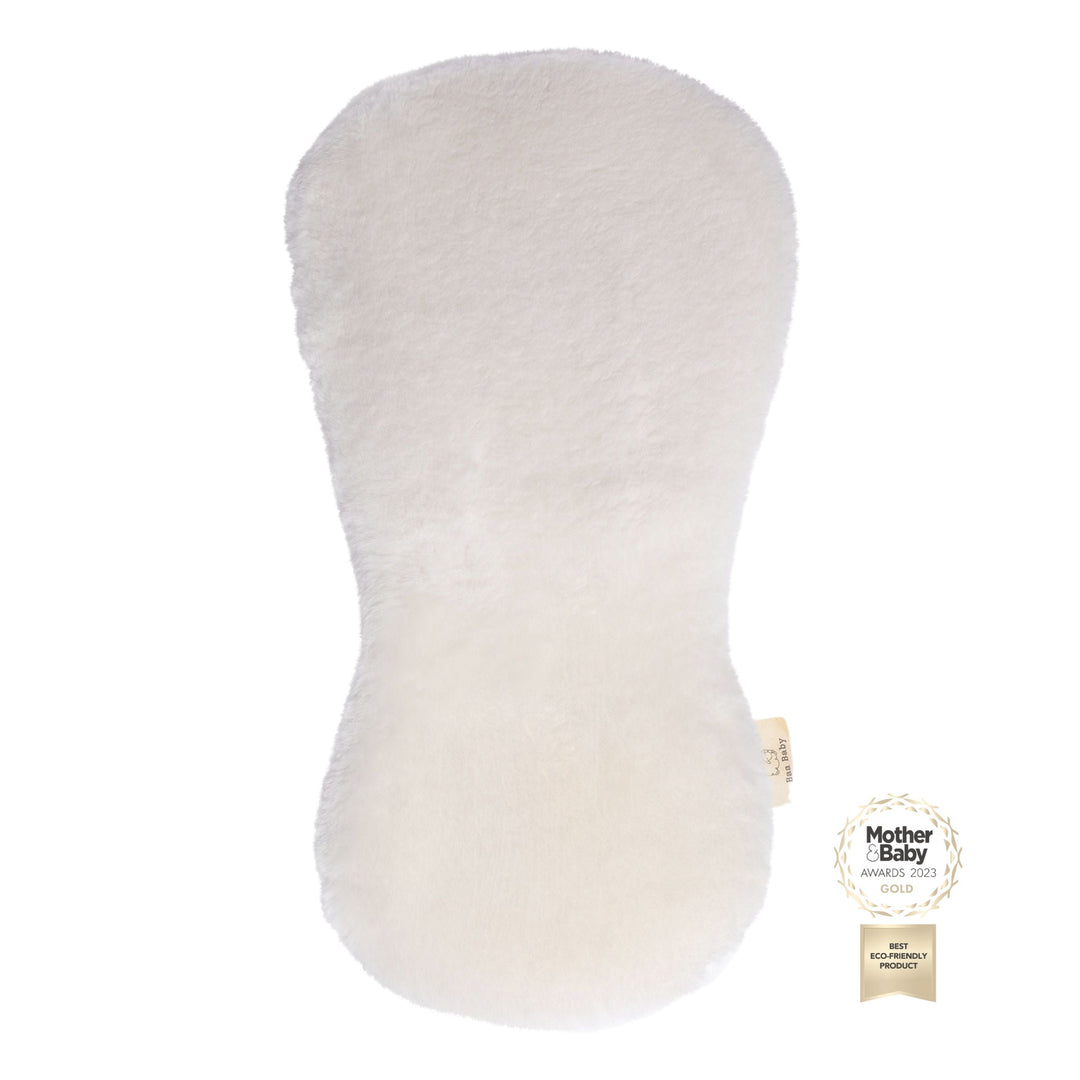
A sheepskin pram liner does cost more upfront - that’s true. But it tends to last much longer.
Most synthetic liners get you through one child before they start to wear out. A well-looked-after sheepskin liner can last for years, often through two or three children. Spread over that time, it often works out better value than replacing a synthetic one more than once.
They also hold their value - many parents pass them on or resell them in great condition.
What we hear most, though, is simple: “I wish I’d started with this.” Babies seem to settle more easily and stay comfortable in all kinds of weather - and that’s something parents notice straight away.




When might synthetic be the right choice?
To be fair: synthetic liners do have their place. If budget is genuinely stretched, a good quality synthetic is better than nothing for protecting pram upholstery and adding a layer of softness. And if your baby is in the pram for only short trips and sleeps elsewhere, the thermoregulation benefits of sheepskin matter less.
But if your baby spends meaningful time in the pram - for naps, longer walks, or daily travel - the case for natural sheepskin is strong.
The bottom line
Synthetic liners are fine. Sheepskin liners are genuinely better, but because the material itself does things no synthetic can replicate: thermoregulating, moisture-wicking, naturally antibacterial, kind to sensitive skin, and built to last for years.
If you're on the fence, the most honest thing we can tell you is this: we've never had a customer switch from synthetic to sheepskin and wish they'd stuck with synthetic !